|
4.2. Ponds
Ponds are generally formed by depressions in the bedrock
or soil, but are sometimes formed from sinkholes in
areas where bedrock or substrates are composed of gypsum
or limestone. Landslides, floods, or beaver activity
create other ponds. Man-made ponds for fishing and fire
control are also common around the province.
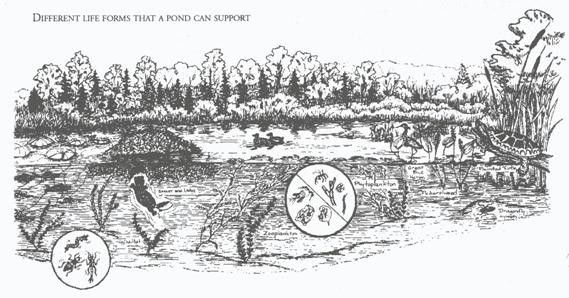
Ponds are really little lakes. The major difference
is that they are smaller and shallower. Light reaches
much of the pond bottom, allowing a wide diversity of
rooted plants and algae to flourish. The numbers of
fish, insects, and other animals found in ponds depend
on how easily they can move to other water areas. Ponds
are a rich food source for fish, but in many cases summer
warming, winter freezing, and low oxygen levels limit
year-round usefulness for sport fish. However, if ponds
are fed by groundwater and there is not too much plant
growth (taking up valuable oxygen) then they will support
sport fish year-round and can be stocked.
Removal of vegetation (trees, bushes, rushes, etc.)
around ponds leads to warmer water and a premature drying
up of the pond. Increased run-off carrying silt and
other sediments can also run into the pond and affect
the pond's ecology. Re-planting and/or seeding can improve
the pond habitat.
|